
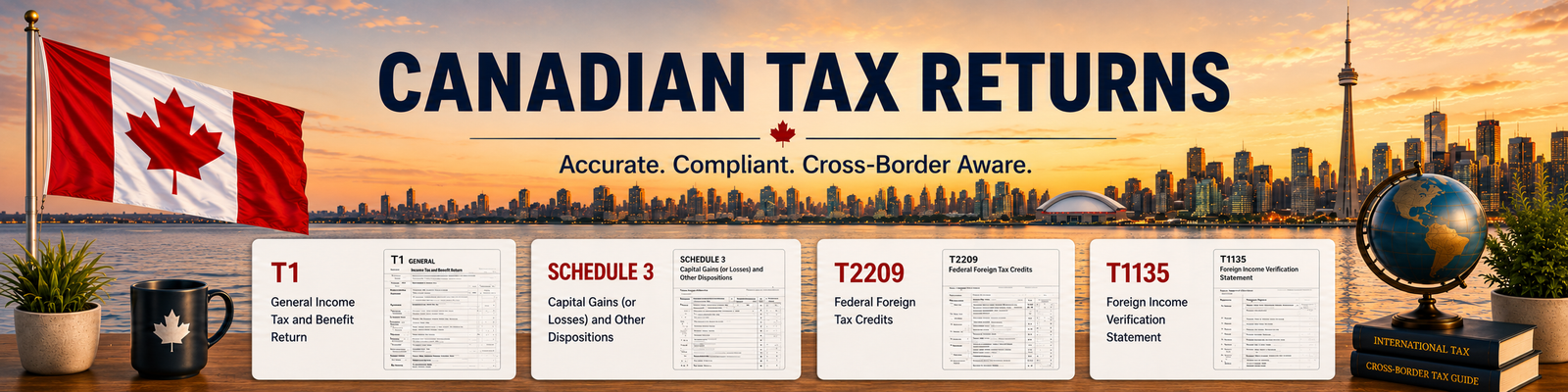
Canadian Tax Filing Services
We prepare Canadian tax returns for residents, part-year residents, newcomers, emigrants, non-residents, and individuals with cross-border tax issues.
Canadian tax filing can become more complicated when a taxpayer moves to or from Canada.
It can also become more involved when the taxpayer has foreign income, owns foreign assets, receives U.S. tax slips, or needs to coordinate Canadian reporting with a U.S. tax return.
As a result, US Taxes Toronto helps individuals understand their Canadian tax filing obligations and coordinate the Canadian return with U.S. tax filings where needed.
Need help with a Canadian tax filing?
We can help identify the Canadian forms that may apply. We also review cross-border issues and prepare a coordinated filing plan.
Who May Need a Canadian Tax Return?
Canadian filing obligations depend on residency, income, and source of income.
They can also depend on whether the taxpayer wants to claim refunds, benefits, credits, or treaty-based positions. Therefore, the correct filing approach depends on the facts.
- Canadian residents filing annual T1 returns
- Newcomers who became Canadian residents during the year
- Emigrants who left Canada during the year
- Part-year residents with income before or after moving
- Non-residents with Canadian-source income
- Individuals with Canadian rental income
- Taxpayers with foreign assets requiring T1135 review
- Individuals who need coordinated U.S. and Canadian tax filings
Canadian Residents and Part-Year Residents
Canadian residents generally report worldwide income on a Canadian tax return. However, a person who moves to or from Canada during the year may have a part-year resident filing position.
For newcomers, the Canadian return may need to reflect the date Canadian residence began. By contrast, emigrants may need to report the departure date and address departure-related tax issues.
Canadian Tax Services We Provide
Depending on your facts, we can assist with several Canadian tax filing and reporting matters.
Canadian Resident T1 Returns
Preparation of annual Canadian resident tax returns, including employment income, investment income, self-employment income, pensions, foreign income, and applicable credits.
Newcomer and Immigrant Returns
Preparation of Canadian returns for individuals who became Canadian residents during the year, including residency start dates and foreign income considerations.
Emigrant and Departure Returns
Preparation of Canadian returns for individuals who left Canada, including departure date issues, foreign income allocation, and potential departure tax considerations.
Canadian Non-Resident Returns
Review and preparation of Canadian non-resident filings for individuals with Canadian-source income, rental property, pensions, or other Canadian filing obligations.
T1135 Foreign Asset Reporting
Review of Canadian T1135 reporting obligations for specified foreign property, including U.S. and other non-Canadian accounts or investments.
Coordinated U.S. and Canadian Filings
Coordination of Canadian and U.S. tax returns for individuals with tax filing obligations, income, accounts, or investments in both countries.
Common Canadian Filing Issues
Canadian tax filing becomes more complex when a taxpayer has foreign income, cross-border investments, foreign tax credits, rental income, or a change in residency.
In those cases, the return may need additional schedules and supporting analysis.
- Determining Canadian tax residency
- Filing as a newcomer, emigrant, or part-year resident
- Reporting foreign income and foreign tax credits
- Reviewing T1135 specified foreign property reporting
- Reporting Canadian rental income or self-employment income
- Coordinating Canadian tax slips with U.S. tax reporting
- Reviewing non-resident Canadian filing obligations
- Reporting investment income, capital gains, and pensions
- Addressing prior-year omissions or amended returns
- Coordinating Canadian filings with U.S. returns where needed
Foreign Reporting Often Matters
A Canadian tax return may involve more than income reporting. In addition, Canadian residents may need to consider Form T1135 if they own specified foreign property above the applicable threshold.
For example, U.S. brokerage accounts, foreign securities, foreign funds, and certain other non-Canadian assets may require T1135 review.
Similarly, a U.S. citizen in Canada may need to coordinate Canadian reporting with U.S. FBAR, Form 8938, and PFIC reporting.
These issues can exist even when the income from the account or investment was reported on the Canadian return.
What Happens Next
Canadian tax filing situations vary widely. Therefore, the first step is to understand your residency, income, accounts, and cross-border facts before requesting detailed records.
Initial review
- We review your Canadian residency and filing history
- We identify the Canadian filings that may apply
- We consider whether foreign reporting is required
- We flag obvious prior-year or cross-border issues
Next steps
- We explain what information is needed for your situation
- We coordinate the Canadian return with U.S. filings where needed
- We prepare the relevant returns and supporting schedules
- We help you understand the filing process before submission
Frequently Asked Questions
Do Canadian residents need to report worldwide income?
In general, Canadian residents report worldwide income on their Canadian tax return. However, the exact reporting depends on residency, income type, foreign tax credits, and applicable treaty rules.
What if I moved to Canada during the year?
You may need to file as a part-year Canadian resident. In that case, the return usually reflects the date Canadian residence began. It may also require special attention to foreign income and foreign tax credits.
What if I left Canada during the year?
You may need to file an emigrant or departure-year return. The return may need to address the date of departure, income allocation, foreign assets, and possible departure tax issues.
Do I need to file T1135?
Possibly. Canadian residents with specified foreign property above the applicable threshold may need to file Form T1135. However, the analysis depends on the type of property, cost amount, and other facts.
Can you prepare both my Canadian and U.S. returns?
Yes. We can assist with coordinated Canadian and U.S. tax filings where a taxpayer has obligations in both countries.
What if I missed prior-year Canadian filings?
The best approach depends on the number of years involved, whether income was omitted, and whether foreign reporting forms were missed. In some cases, amended returns or voluntary disclosure may need to be considered.
Official CRA Resources
For official Canadian tax filing information, you can also review CRA guidance directly:
Need Help With a Canadian Tax Filing?
If you are a Canadian resident, newcomer, emigrant, non-resident, or cross-border taxpayer, consider reviewing the correct filing approach before submitting the return.
We can help identify the required filings, prepare the relevant returns, and coordinate Canadian reporting with U.S. tax filings where needed.
Disclaimer: This page provides general information only and does not constitute legal, tax, accounting, investment, or financial advice. Canadian tax filing obligations depend on the specific facts, income, residency status, accounts, investments, prior filings, and applicable law. Therefore, obtain advice based on your own circumstances before taking action.